Contact CNA's Claim Center
Report a New Claim
CNA’s Claim Catastrophe Operations Center is fully operational and ready to assist customers with claims related to wildfires.
Voice: 877-CNA-ASAP (877-262-2727), Select Option 2
Fax: 800-953-7389
Email: lossreport@cnaasap.com
Need additional support once your claim is reported? Our Claims professionals are on hand to assist with policyholder needs.
Voice: 877-706-0671
Fax: 877-733-4254
Key Actions Businesses Can Take to Prepare
Planning ahead can minimize property damage and keep your business running smoothly. Setting up basic safety steps ensures your business is ready to act.
Property Protection Best Practices:
- Maintain Clear Space (0–30 feet): Remove debris, dry vegetation and other combustible materials near structures
- Manage Outer Vegetation (30–100+ feet): Thin trees and brush to slow potential fire spread
- Harden the Structure and Vents: Use fire-resistant materials and protect vents, roofs and other vulnerable areas
Business Continuity Planning
Having a well-defined Business Continuity Plan (BCP) can help ensure proper shutdown and restart procedures in the face of natural disasters. Review annually to help protect people, equipment and operations.
BCPs should include:
- Equipment shutdown procedures
- System restart protocols
- Protection of critical assets and infrastructure
- Off-site data backup and recovery planning
Emergency Planning for Employees
Structured workplace health and safety planning can reduce confusion and help protect your workforce under hazardous conditions. Those plans should include:
- Incident response drills and testing
- Emergency communication plans and call trees
Smoke exposure awareness and safety training
Review each of these annually with your team to ensure emergency preparedness.
When an active wildfire threatens your area, business operations must stop so your team can focus on personal safety and facility protection.
Property and Personal Protection Best Practices:
- Monitor real-time updates and official guidance
- Clear areas around windows and entry points
- Close all doors, windows and vents
- Pack vital records
- Move vehicles away from structures
If local authorities order an evacuation, everyone must leave immediately. Before leaving, secure your facility by turning off machinery, closing main gas lines, shutting outdoor fuel valves and ensuring fire sprinkler valves remain wide open.
Block toxic smoke by shutting down HVAC fans that pull in outside air. If smoke enters before you evacuate, use your highest filter setting and portable HEPA filters. Finally, protect outdoor workers from dangerous air quality by moving work indoors, altering schedules or providing breathing masks. Use an emergency call tree to confirm every employee is safe.
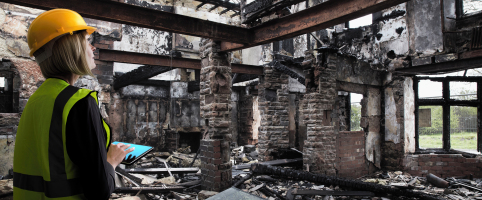
Acting quickly after a wildfire can help restore operations while ensuring your property is structurally secure and free of hazards.
Important Steps Following Wildfire Damage:
- Document all damage with photos and video before cleanup
- Establish temporary operations or remote workspaces
- Hire professionals to check utilities and restore electrical power slowly
- Clean ventilation and utility lines to replace ruined filters and flush stagnant systems
- Follow manufacturer instructions and test all safety switches before restarting machinery
- Verify that all building certificates and official regulatory inspections are up to date
Expert Insight
"Wildfire resilience is built long before smoke appears on the horizon. Organizations that proactively manage vegetation, harden vulnerable assets, and prepare response and recovery plans are far better positioned to withstand wildfire events and minimize operational impacts."
Ali Soltani, PhD, PE
Risk Control Consulting Director – Global Natural Hazards Strategy
Additional Resources
Stay connected with real-time updates, fire monitoring and environmental data from verified government and industry agencies: