Flood
Resource Center

Contact CNA's Claim Center

Report a New Claim


CNA’s Claim Catastrophe Operations Center is fully operational and ready to assist customers with claims related to floods.


Voice: 877-CNA-ASAP (877-262-2727), Select Option 2
Fax: 800-953-7389
Email: lossreport@cnaasap.com


Need additional support once your claim is reported? Our Claims professionals are on hand to assist with policyholder needs.


Voice: 877-706-0671
Fax: 877-733-4254

Flood Preparedness: A Resource Center


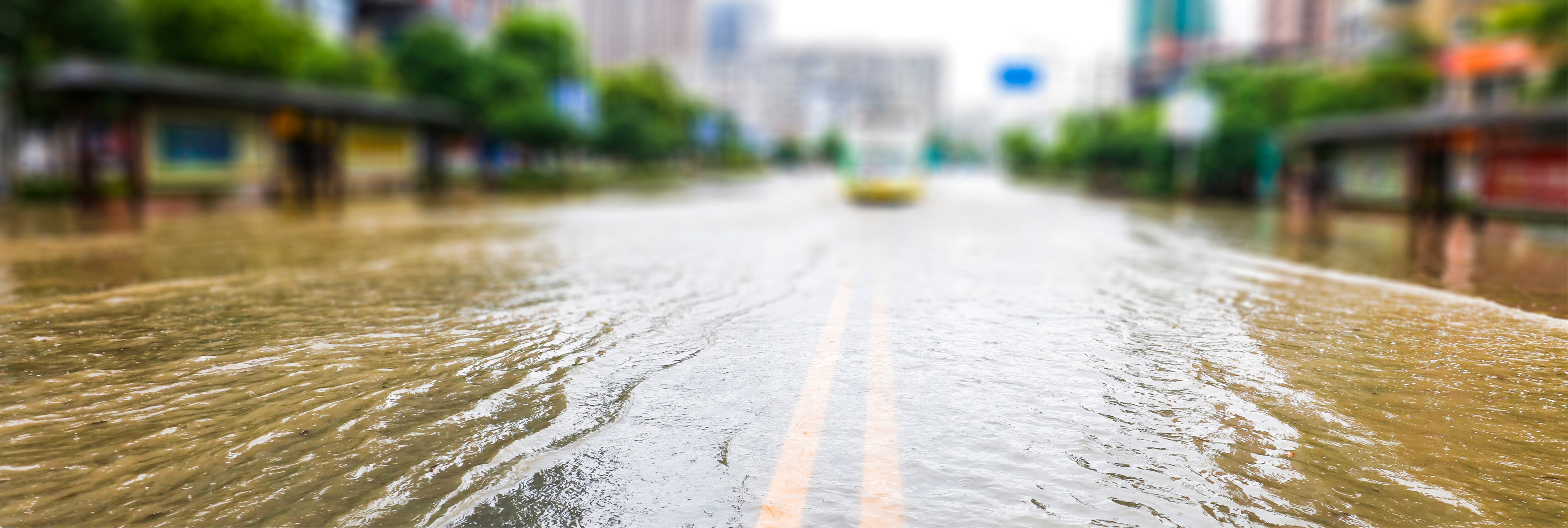
Floods are among the most common and costly natural disasters in the U.S. Whether caused by heavy rainfall, storm surge, overflowing rivers or flash flooding, they can have devastating consequences, making preparation essential.


To help keep operations running smoothly, businesses should have plans in place to minimize disruptions and support recovery if or when flooding occurs. Whether you're advising clients or reviewing your own operations, being prepared can make a meaningful difference.


CNA offers practical guidance to help businesses prepare for, respond to and recover from flooding.
 

Did you know?


  • Half a billion people worldwide are affected by floods each year.1
  • Approximately 90% of natural disasters in the U.S. involve flooding.1
  • Flood damage has quadrupled since 2016.2
  • Federal flood maps underestimate the number of homes and businesses at significant flood risk by more than 65%.3
  • 40% of businesses do not reopen after a disaster, and another 25% fail within one year.4


For Agents & Brokers


Support your clients before, during and after a flooding event with ready-to-use resources including:

  • Client-ready preparedness and response guidance
  • Communication templates for pre- and post-flood outreach 
  • Shareable resources to reinforce risk mitigation


Download the Flood Toolkit


For Business & Property Owners


Protect your people, property and operations with proactive planning and informed decision-making.

Taking proactive steps before a flood occurs can help improve business resilience and support recovery efforts.

  • Assess flood exposures and potential vulnerabilities 
  • Review emergency response and business continuity plans
  • Ensure employee contact information and communication plans are up-to-date
  • Understand local evacuation routes and emergency procedures


Property protection best practices

  • Elevate critical equipment, machinery and important records 
  • Inspect and maintain drainage systems, gutters and roof drains
  • Install flood barriers or other protective measures in vulnerable areas
  • Secure outdoor equipment and materials that could be displaced by floodwaters
     

Business continuity planning

  • Identify critical business functions and recovery priorities 
  • Develop plans for remote operations if facilities become inaccessible
  • Review vendor and supply chain dependencies
  • Back up important business data and records to remote off-site storage


Emergency planning for employees

  • Establish emergency communication protocols 
  • Provide evacuation and shelter procedures
  • Assign responsibilities for emergency response and business recovery

When flooding threatens or occurs, focusing on safety and following established response procedures can help protect people and reduce further disruption.

  • Prioritize employee and visitor safety 
  • Follow evacuation orders and guidance from local authorities
  • Monitor weather alerts and flood warnings


Safety always comes first

  • Prioritize lives before property
  • Maintain communications with employees and key stakeholders 
  • Follow emergency response plans
  • Stay informed through trusted local and government resources


Key communications during a flood event

  • Employee notifications and emergency updates
  • Customer and supplier communications 
  • Business continuity and operational status updates

Once conditions are safe, organizations should begin assessing damage, documenting losses and implementing recovery plans.

  • Document property damage
  • Take steps to prevent further damage, when safe to do so 
  • Assess options for temporary operations

Expert Insight


“One of the greatest challenges with flood risk is that conditions can change over time as development, drainage patterns, and weather events evolve. Organizations that understand their flood exposure, maintain protective measures, and plan for response and recovery are better positioned to reduce losses and resume operations more quickly after an event.”
 

– Ali Soltani, PhD, PE
Risk Control Consulting Director, Global Natural Hazards Strategy

Disclaimers:
The information, examples and suggestions presented in this material have been developed from sources believed to be reliable, but they should not be construed as legal or other professional advice. CNA accepts no responsibility for the accuracy or completeness of this material and recommends the consultation with competent legal counsel and/or other professional advisors before applying this material in any particular factual situations. This material is for illustrative purposes and is not intended to constitute a contract. Please remember that only the relevant insurance policy can provide the actual terms, coverages, amounts, conditions and exclusions for an insured. All products and services may not be available in all states and may be subject to change without notice.


Any references to non-CNA websites are provided solely for convenience and CNA disclaims any responsibility with respect thereto.


“CNA” is a registered trademark of CNA Financial Corporation. Certain CNA Financial Corporation subsidiaries use the “CNA” trademark in connection with insurance underwriting and claims activities. Copyright © 2026 CNA. All rights reserved.


1. Flood: Beyond Risk Transfer, Insurance Information Institute, 29,2021.
https://www.iii.org/white-paper/flood-beyond-risk-transfer


2. Water Damage Statistics, iProperty Management,1, Feb 2025
https://ipropertymanagement.com/research/water-damage-statistics


3.New Data Reveals Hidden Flood Risk Across America, New York Times
https://www.nytimes.com/interactive/2020/06/29/climate/hidden-flood-risk-maps.html


4.When Disaster Strikes: Preparation, Response and Recovery for Your Business, Insurance Information Institute
https://www.iii.org/article/when-disaster-strikes-preparation-response-and-recovery